12 Electronics Business Ideas for 2027 With Startup Costs
Updated · First published
TL;DR
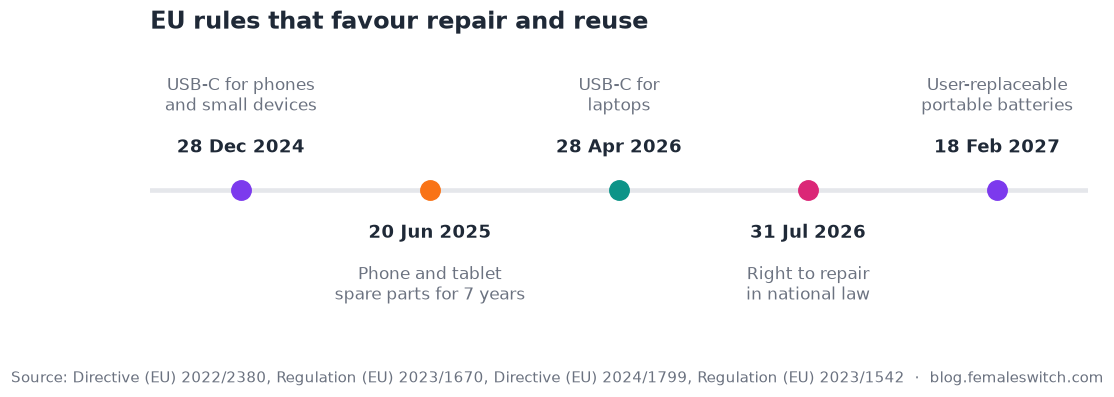
The best electronics business ideas for a small founder right now sit in repair, refurbishing and services, not in selling new gadgets against Amazon. New EU rules push in that direction: phones and tablets sold in the EU since 20 June 2025 must have spare parts available for 7 years, and the EU right to repair directive had to be in national law by 31 July 2026. Start with a service you can sell this month, test demand with 10 paying customers, and only then buy stock.

Want to test your idea before you spend money?
Fe/male Switch is a startup game where you take an idea to your first customer step by step, with an AI co-founder next to you.
Why look at electronics business ideas in 2027?
I'm Violetta Bonenkamp, founder of Fe/male Switch and CADChain, a deep tech company that protects engineering design files. I see two forces that make small electronics businesses more interesting than they were a few years ago.
Rules now favour repair and reuse. The EU has stacked several laws on top of each other:
- Right to repair: Directive (EU) 2024/1799 makes manufacturers of covered products repair them after the legal guarantee ends, and a repair under guarantee extends that guarantee by 12 months. Member states had to apply it by 31 July 2026.
- Phones and tablets: under the ecodesign rules for smartphones and tablets, in force since 20 June 2025, makers must keep spare parts available for 7 years after a model leaves the market and the new EU energy label shows a repairability class from A to E.
- One charger: the common charger rules made USB-C mandatory for phones and most small devices on 28 December 2024, and for laptops on 28 April 2026.
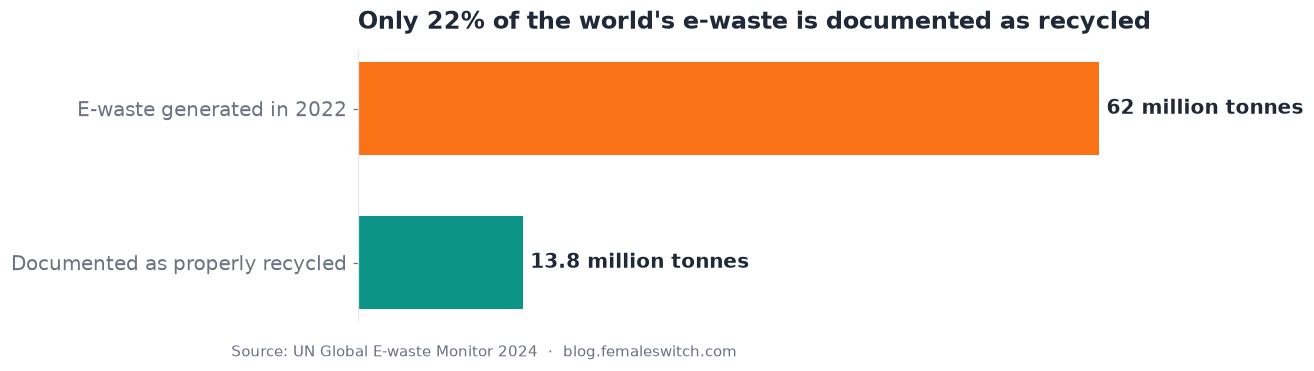
There is a mountain of devices to work with. The UN's Global E-waste Monitor 2024 counted 62 million tonnes of e-waste in 2022 and only 22.3% of it was documented as properly collected and recycled. The report puts the value of the metals lost every year at about US$62 billion. Every broken laptop in a drawer is a customer for somebody.
Here is why that matters for you: a repair or refurbishing business needs skills and a workbench, and big retailers don't want that work. That gap is your opening.
Which electronics business ideas can you start with little money?
The budgets below are our rough estimates for a one-person start in Western Europe in 2027. Your city, your skills and second-hand tools change them a lot, so treat them as a starting point for your own spreadsheet.
| # | Idea | Rough starting budget | Skills you need | How fast you can earn |
|---|---|---|---|---|
| 1 | Phone and tablet repair | €1,000 to €4,000 | Soldering, screen and battery swaps | Weeks |
| 2 | Laptop repair and upgrades | €1,000 to €3,000 | Diagnostics, SSD and RAM upgrades | Weeks |
| 3 | Refurbished electronics shop | €3,000 to €15,000 | Testing, grading, data wiping | 1 to 3 months |
| 4 | Game console repair and retro mods | €800 to €3,000 | Micro-soldering, community marketing | Weeks |
| 5 | Smart home installation | €500 to €2,000 | Networking, Wi-Fi, local electrical rules | Weeks |
| 6 | DIY electronics kits and workshops | €2,000 to €8,000 | Teaching, product design | 1 to 3 months |
| 7 | IT asset disposal and data wiping for companies | €2,000 to €10,000 | Certified wiping, logistics | 1 to 3 months |
| 8 | Battery replacement service (e-bikes, tools, laptops) | €2,000 to €6,000 | Battery safety training | 1 to 2 months |
| 9 | Electronics rental for events and creators | €5,000 to €20,000 | Inventory and insurance | 1 to 3 months |
| 10 | Niche online store (one product category) | €3,000 to €10,000 | E-commerce, supplier checks | 2 to 6 months |
| 11 | PCB design and prototyping service | €1,000 to €5,000 | Electronics engineering, CAD | Weeks |
| 12 | Consumer electronics YouTube or review site | Under €1,000 | Content, honesty, patience | 6 to 12 months |
Let's break down the ideas with the best mix of low cost and steady demand.
Phone and tablet repair
This is the classic home based electronics business and it still works. Screens, batteries and charging ports break every day, and the 7-year spare parts rule for phones sold in the EU since June 2025 means parts get easier to buy. Start from home or a market stall, offer pickup, and add a simple warranty on your work (90 days is a common promise). Price by part plus a fixed labour fee so customers can compare you with the brand's own service.
Laptop repair and upgrades
Many laptops that feel "slow" need an SSD, more RAM or a fresh battery. That is a 30 to 60 minute job with a big effect, and companies with 20 to 200 laptops will pay for a regular service visit. USB-C charging on new laptops sold in the EU since April 2026 also creates small, easy sales: docks, chargers and cable kits.
Refurbished electronics shop
Buy used phones, laptops or monitors in bulk from companies that replace their equipment, test and grade them, wipe the data, and resell with a warranty. Your margin comes from grading honestly and testing well, because returns kill refurbishing businesses. Publish your grading scale (A, B, C) with photos so buyers trust you.
Game console repair and retro mods
Controllers with stick drift, consoles that overheat, and retro systems that need new capacitors all need a careful pair of hands. Gamers are loyal and talk to each other in forums and Discord servers, so a good reputation spreads fast.
Smart home installation
People buy smart lights, cameras and thermostats and then get stuck on Wi-Fi, apps and privacy settings. Sell fixed-price packages ("smart doorbell installed and set up: €89"). Check which jobs need a licensed electrician in your country before you touch mains wiring.
DIY electronics kits and workshops
Kits for kids, schools and hobbyists combine a product with teaching. Workshops bring cash in before you hold stock, and the kits you sell afterwards are your second income. If you sell kits in the EU you need CE marking, so start with workshops and add kits once you know which projects people love.
IT asset disposal and data wiping for companies
Companies must get rid of old laptops and phones without leaking data. A service that collects devices, wipes them with a recognised method, hands over a certificate and resells or recycles the hardware earns twice: once for the service and once for the device.
Battery replacement service
E-bike, power tool and laptop batteries wear out long before the device does. From 18 February 2027 the EU Batteries Regulation (EU) 2023/1542 requires portable batteries in many new appliances to be removable and replaceable by the user, which will grow this market. Lithium batteries can catch fire, so get proper training, storage and insurance first.
PCB design and prototyping service
If you are an engineer, small companies and inventors need someone to turn an idea into a working circuit board. Protect your design files and your clients' files from day one: designs leak easily when they travel between freelancers, factories and clients. CADChain writes about CAD file protection for exactly this situation.
Is an electronics business profitable?
Yes, when you sell skills and trust, and much less when you sell boxes. Selling new gadgets puts you in a price war with Amazon, MediaMarkt and Best Buy, who buy in volumes you can't match. Repair, refurbishing, installation and design services keep most of the price as your margin because your time and know-how are the product.
Three numbers to watch from your first month:
- Gross margin per job or per device (price minus parts and shipping).
- Return and redo rate. Above 5% means your testing or your parts supplier needs work.
- Repeat and referral share. Repair businesses grow on word of mouth; if fewer than a third of customers come through referrals after six months, fix your service before you spend on ads.
Which rules apply to an electronics business?
Rules depend on what you sell and where. These are the ones founders forget most:
- Selling new devices in the EU: products need CE marking and the importer or manufacturer is responsible for it. If you import under your own brand, that is you.
- E-waste: under the WEEE Directive 2012/19/EU anyone who puts electrical products on a national market, online sellers included, registers as a producer and pays for collection and recycling in that country.
- Batteries: the EU Batteries Regulation adds labelling and take-back duties, and the replaceable battery rule from February 2027.
- United States: most electronics need FCC equipment authorization. Devices without radios go through the Supplier's Declaration of Conformity, and Wi-Fi and Bluetooth devices need full certification. The FCC equipment authorization pages list the steps.
- Repair: in the EU the right to repair directive also bans manufacturers from blocking independent repairers with contract terms or software tricks for covered products, which protects your repair shop.
Rules change, so check your own country's version before you launch and ask a local adviser when you import products under your own brand.
How do you test an electronics business idea before spending money?
Next steps, in this order:
- Pick one customer group and one problem. "Students with cracked phone screens near campus" beats "electronics repair".
- Sell before you stock. Post the offer in local groups and on a simple one-page site, take bookings, and buy parts per order.
- Do ten jobs and write everything down: time spent, parts cost, what the customer said, whether they'd recommend you.
- Draw your business on one page. Our business model canvas examples show how to fill in customers, channels and costs for a small service business.
- Plan the launch. Use the startup checklist for registration, insurance and taxes, and the startup marketing plan example for your first 90 days of promotion.
- Look for grants if you build hardware. The EU Funding and Tenders Portal explains how to find and judge EU calls for hardware and research projects.
Want more ideas in the same family? Read our tech business ideas, new product ideas and low cost startup business ideas.
FAQ
What is the easiest electronics business to start from home?
Phone, tablet and laptop repair. You need a bench, a starter tool kit, a stock of the most common parts and a way to take bookings. Start with screens and batteries, which make up most requests, and say no to board-level work until you have practised on spare devices.
Which electronics business needs the least money?
Services: repair, smart home set-up, data wiping and PCB design. They need tools and skills, and you buy parts per order. A review site or YouTube channel costs even less, but it takes 6 to 12 months before it earns.
Can I sell electronics online without my own brand?
Yes. Reselling refurbished devices or one niche product category works if you pick a narrow focus, check suppliers carefully and register for WEEE in each EU country you sell into. Without a niche you compete on price with the biggest retailers in the world.
What are good electronics business ideas for students?
Phone repair on campus, tech set-up for older neighbours, refurbishing laptops for other students, and electronics workshops for kids. They fit around classes and need little stock. For more options see our business ideas for university students.
How do I start an electronics company that makes its own product?
Begin with a prototype and ten real users, then budget for certification (CE in the EU, FCC in the US), a manufacturer, packaging and WEEE registration before launch. Hardware takes longer and costs more than software, so test demand with pre-orders or a crowdfunding page before you order a production run.
What should you do next?
Pick one idea from the table, choose one customer group, and get your first paying job within 30 days. If you want a structured way to go from idea to first customer, play Fe/male Switch: the startup game walks you through validation, pricing and your first sales, and it was built for women founders who start with little money and no technical co-founder.